
Language
What it delivers
Reports, files and letters that fill themselves in with the right data, in the right format. More time for the work itself, less for the administration around it.
How it works
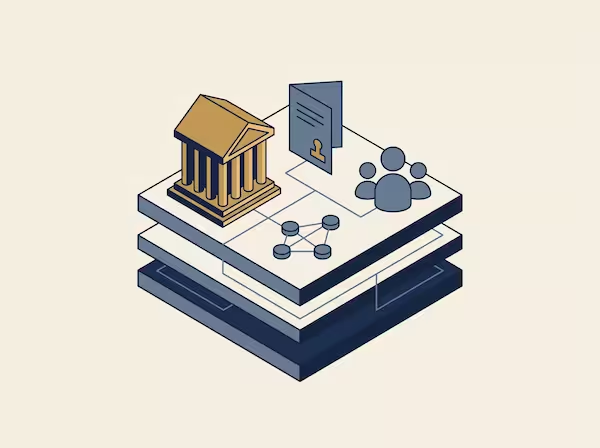
Document AI reads and structures source data (files, notifications, forms) and converts it into the desired document format, checked against the rules laid down in the Ontology. Not a standalone language model generating free text, but a process traceable back to the source data.

Care files, reports and handovers, automatically compiled from source data.
Policy reports and accountability documents, consistently built from underlying data.


Contract and SLA reports for clients, generated directly from operational data.
Three examples of Document AI in practice, by sector.
Healthcare
A nurse in a nursing home ends every shift with half an hour of handover and reporting, mostly repeating what is already in the file. Document AI automatically compiles the report from existing file data, with the nurse performing the final check.
More about Document AI for healthcare →Government
A municipal licensing officer currently drafts decisions largely by hand using information already available in the file. Document AI compiles the draft decision based on that file data, ready for the officer to review.
More about Document AI for government →Insurers
A claims adjuster currently compiles policy documents and damage reports largely by hand using data already in the system. Document AI automatically generates these documents, with the adjuster performing the final check.
More about Document AI for insurers →Facility management sector
A site manager currently compiles monthly reports for the client manually for each location, using data already present in the system. Document AI automatically generates these reports from operational data.
More about Document AI for facility management →




.avif)